Hard Water and Its Effect on Water Heater Life
Katy's hard water leaves scale inside your tank, shortens its life, and raises energy bills. Here's what actually happens and how to protect your water heater.
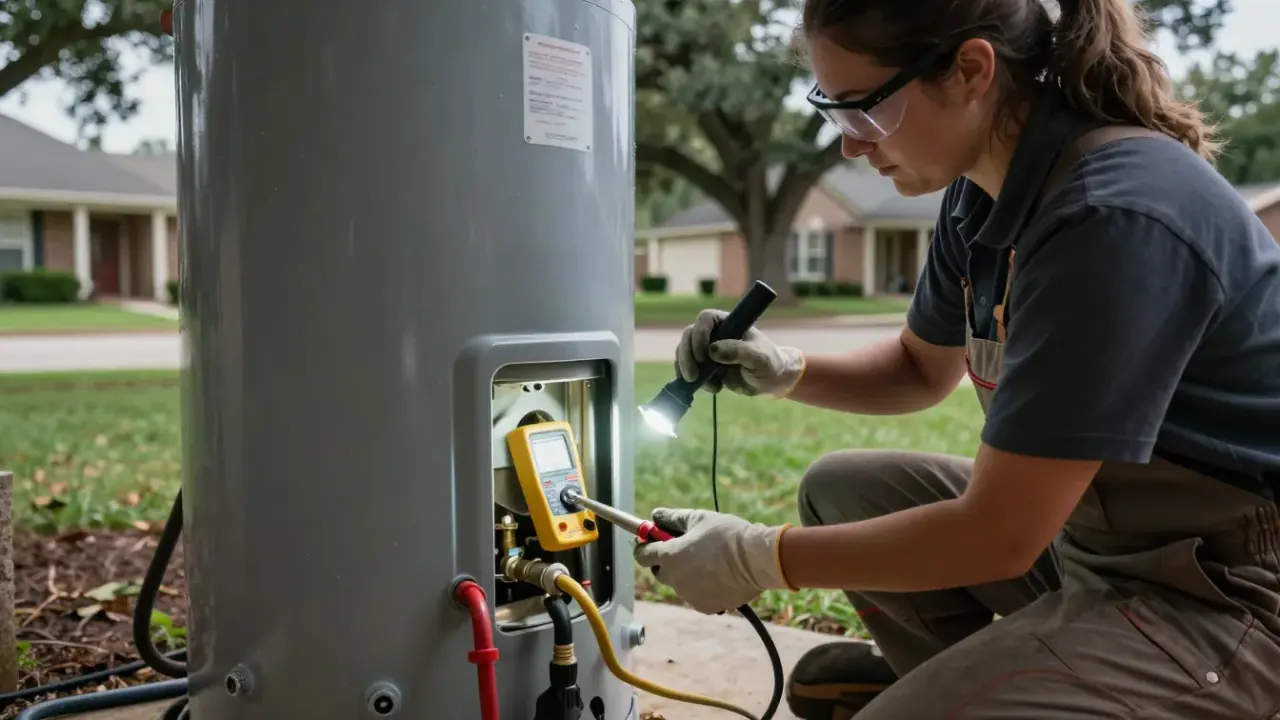
Hard water is the single biggest reason water heaters in Katy fail years before they should. The minerals in our water supply coat the tank's interior, the heating elements, and the burner, forcing your system to work harder and eventually burn out. If your water heater is 6-10 years old and you've never flushed it, scale is already eating into its lifespan. This article explains exactly what hard water does inside your tank, how to spot the damage, and the steps you can take to protect your investment.
Why Katy's Water Is So Hard
Katy's water comes from the Gulf Coast aquifer and the Brazos River, both of which pick up calcium and magnesium as they move through limestone and dolomite. That's what makes our water "hard" - measured in grains per gallon (gpg). The national average is around 5 gpg. Katy's water typically runs between 8 and 12 gpg, and some wells test as high as 15 gpg. For comparison, water is considered very hard above 10.5 gpg.
That mineral load doesn't just leave spots on your dishes. Every time you heat water, those dissolved minerals precipitate out as solid scale. In a water heater, that scale settles on the bottom of the tank and on the heating elements. Over time, it builds up like the crust inside a kettle - except you can't see it, and it's working against you 24/7.
We see this across every neighborhood we serve, from Water Heater Repair in Cinco Ranch to the newer builds out in Water Heater Repair in Sunterra. The water source is the same, and the damage pattern is the same.
What Hard Water Actually Does Inside Your Water Heater
Hard water effect on water heater Katy TX is not a one-time event - it's a slow, cumulative process that touches every part of the system.
Sediment Buildup on the Tank Floor
As water heats, calcium carbonate and magnesium precipitate and fall to the bottom of the tank. That layer of sediment acts as insulation between the burner or element and the water. The heater has to run longer to reach the set temperature, which drives up your gas or electric bill. In a gas unit, the sediment also causes hot spots on the tank floor that can lead to premature cracking.
Scale on Heating Elements and Burners
In electric water heaters, scale coats the heating elements directly. The element has to work harder, overheats, and eventually fails. In gas models, scale builds up on the burner and the flue, reducing efficiency and causing the tank to overheat in spots. A 1/8-inch layer of scale can increase energy consumption by 10-15%.
Corrosion and Anode Rod Depletion
Hard water accelerates the corrosion process inside the tank. The anode rod - a sacrificial metal rod that attracts corrosion away from the steel tank - depletes faster when minerals are present. In Katy, we often see anode rods that are completely consumed in 3-4 years instead of the typical 5-6. Once the rod is gone, the tank itself starts to rust from the inside out.
Reduced Hot Water Recovery
With sediment and scale insulating the heat source, your water heater takes longer to recover after you've used a lot of hot water. You might notice that the second shower runs cold, or that the dishwasher doesn't get as hot. That's a direct result of hard water slowing down heat transfer.
How Does Hard Water Affect My Water Heater in Katy TX?
Hard water shortens your water heater's life by 30-50% compared to a tank running on soft water. A unit that should last 12 years might fail at 6 or 7. The damage happens in three stages: sediment accumulation, scale hardening, and finally corrosion or element failure. Each stage makes the next one worse.
We've pulled tanks in Katy that were only 5 years old but had 2 inches of solid scale on the bottom. The homeowner had no idea - the water was still hot, just not as hot as it used to be, and the gas bill had crept up. By the time they called us, the tank was already leaking from a crack caused by overheating.
If you're noticing any of these signs, it's worth having a professional inspect the tank. We offer anode rod and tank flush maintenance Katy TX that removes sediment and replaces the rod before the damage becomes permanent.
Signs Your Water Heater Is Already Suffering from Scale
You don't need to cut open your tank to know scale is building up. These symptoms show up long before a leak starts:
- Popping or rumbling sounds - that's steam bubbling up through the sediment layer.
- Less hot water than before - recovery time gets longer as scale insulates the heat source.
- Higher utility bills - a 10-15% jump without a rate increase usually points to sediment.
- Discolored or rusty water - scale can flake off and show up at the tap, or it can signal tank corrosion.
- Visible scale at the drain valve - white crust around the valve means the tank is full of it.
If you hear popping, that's your water heater telling you it's full of sediment. A flush now can add years to its life. Ignore it, and you'll be calling us for leaking tank repair Katy TX sooner than you think.
Does Katy Have Hard Water?
Yes - Katy's water is among the hardest in the Houston metro area, averaging 8-12 grains per gallon. That's well above the 7 gpg threshold where the Water Quality Association recommends a water softener. If you're on a private well in the surrounding areas, it can be even harder. The city does not soften the water supply, so every home in Katy is dealing with the same mineral load.
We test water hardness on every maintenance call, and the numbers are consistent across neighborhoods. Whether you're in Water Heater Repair in Seven Meadows or Water Heater Repair in Fulshear, the scale problem is the same. The only variable is how well the water heater has been maintained.
How to Protect Your Water Heater from Hard Water in Katy Texas
You can't change the water supply, but you can absolutely extend the life of your water heater with a few proven steps. Here's what we recommend to every homeowner in Katy:
- Flush the tank every 6-12 months. This is the single most effective thing you can do. A professional flush removes sediment before it hardens. For a tankless unit, you need tankless flush and descaling Katy TX at least once a year - the scale builds up on the heat exchanger and can't be drained out.
- Replace the anode rod every 3-5 years. In Katy's water, we often replace them at the 3-year mark. It's a cheap part that saves the whole tank.
- Install a whole-house water softener. This removes the calcium and magnesium before they ever enter your water heater. It's the best long-term protection for your plumbing and appliances.
- Check the temperature setting. Keep it at 120°F. Higher temperatures accelerate scale formation and corrosion.
- Consider a powered anode rod. For homes with very hard water, a powered anode rod lasts longer and provides better protection than a standard magnesium or aluminum rod.
If your water heater is already showing signs of scale damage, we can help. Our team provides Water Heater Repair Katy TX and maintenance to get your system back in shape.
Common Mistakes That Shorten Water Heater Life
We see these mistakes over and over when we open up a failed tank. Avoiding them can mean the difference between a 6-year lifespan and a 12-year one.
- Never flushing the tank. Most homeowners don't know they're supposed to. By the time they find out, the sediment is rock-hard.
- Ignoring the anode rod. It's the tank's only defense against corrosion. Once it's gone, the tank is on borrowed time.
- Turning the temperature up to get more hot water. That just accelerates scale and can scald. Fix the sediment problem instead.
- Using a water softener but not maintaining it. A softener that's out of salt is just a bypass. Check it monthly.
- Waiting until there's a leak. By then, the damage is done. Regular maintenance catches problems early.
If you're not sure when your tank was last flushed, call us. We can inspect it and tell you exactly what condition it's in.
When to Call a Professional
Some water heater issues are safe to handle yourself - like checking the pilot light or resetting a breaker. But hard water damage is different. It requires draining the tank, removing the anode rod, and sometimes pulling the heating element. If you're not comfortable with that, or if you see any of these signs, it's time to call a pro:
- Popping or banging sounds that don't go away after a flush
- Rusty water coming from the hot tap
- Moisture or a puddle around the base of the tank
- Inconsistent hot water or sudden drops in temperature
- The tank is over 8 years old and has never been serviced
At Katy Water Heater Repair, we handle everything from routine flushes to full tank replacements. We'll tell you honestly whether a repair is worth it or if it's time for a new unit.
Frequently Asked Questions
How does hard water affect my water heater in Katy TX?
Hard water leaves scale and sediment inside your tank, which insulates the heat source and forces the system to work harder. Over time, this leads to higher energy bills, longer recovery times, and premature failure - often cutting the tank's life by 30-50%.
Does Katy have hard water?
Yes. Katy's water averages 8-12 grains per gallon, which is considered very hard. The city does not soften the water, so every home is affected. Private wells in the area can be even harder.
How to protect water heater from hard water in Katy Texas?
Flush the tank every 6-12 months, replace the anode rod every 3-5 years, and install a whole-house water softener. Keep the temperature at 120°F. For tankless units, descale annually. These steps can double your water heater's lifespan.
Who can flush my water heater near me in Katy?
Katy Water Heater Repair offers professional tank flushing and descaling. We serve all Katy neighborhoods and can usually schedule same-week service. Call (281) 326-6032 to book.
Can I flush my own water heater?
You can, but it's messy and easy to miss the sediment that's hardened on the bottom. A professional flush uses a pump and descaling solution to break up stubborn scale. We also inspect the anode rod and heating elements while we're in there.
Get Help with Water Heater Repair in Katy
If your water heater is struggling with hard water damage, don't wait for a leak. Call Katy Water Heater Repair at (281) 326-6032. We'll flush the tank, replace the anode rod, and check the heating elements - so you can get back to reliable hot water and lower bills.