What Is an Anode Rod and When Should It Be Replaced
The anode rod is a sacrificial metal rod inside your tank that rusts so your steel tank doesn't. In Katy's water, most rods need replacing every 3 to 5 years.
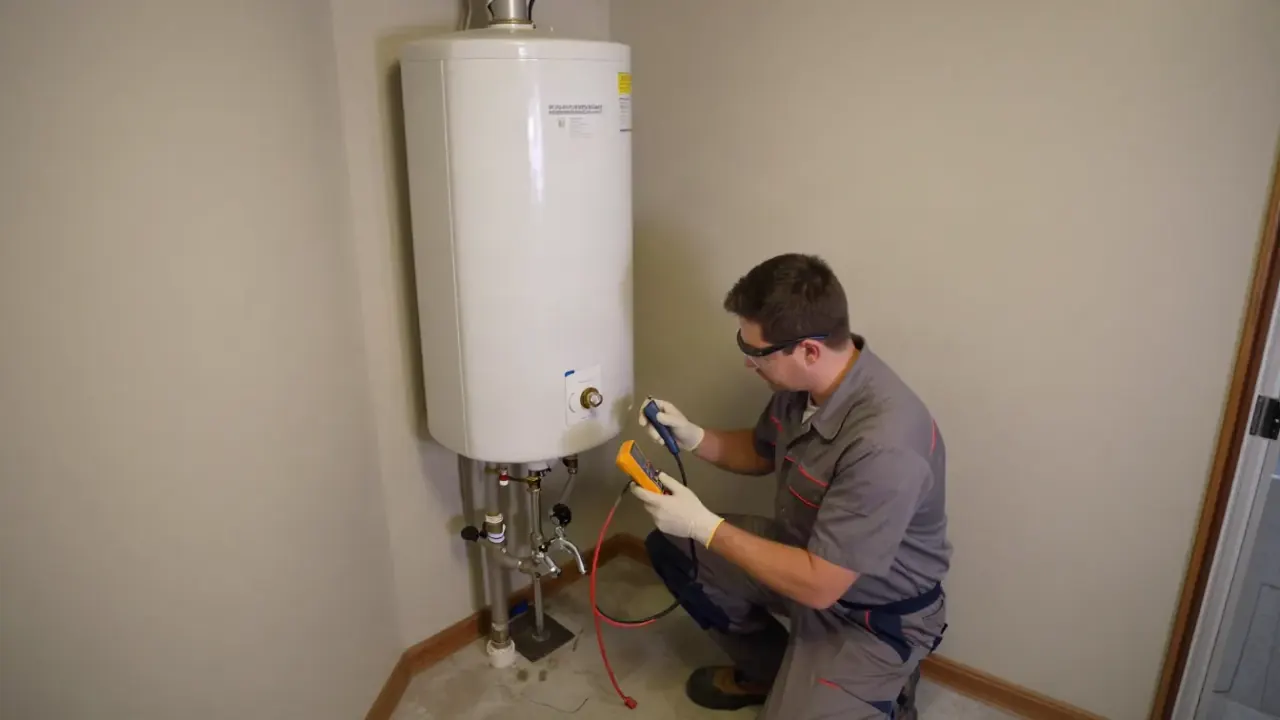
An anode rod is a sacrificial metal rod inside your water heater tank that corrodes so the steel tank doesn't. In Katy, most tank-style water heaters need a new anode rod every 3 to 5 years, and some homes on well water or softened water need one every 2 to 3 years. The rest of this post covers what the rod is made of, why our local water is hard on it, and the exact signs that tell you it's time to swap it out before the tank starts leaking.
What an Anode Rod Actually Does
An anode rod is a replaceable metal core - usually aluminum or magnesium wrapped around a steel wire - that sits inside the tank and attracts corrosion away from the tank walls. The science is simple: when two dissimilar metals sit in the same water, the more reactive one gives up its electrons first. That's the rod. The tank stays intact.
Every tank-style water heater sold in the U.S. has at least one anode rod, and most 40- to 50-gallon units have a single hex-head rod screwed into the top. Some larger tanks use two - one on the hot outlet and one on the cold inlet. The rod is the only part of the tank designed to be consumed. Once it's gone, the tank itself becomes the anode, and that's when you start seeing rust-colored hot water and, eventually, a puddle on the garage floor.
A standard magnesium anode rod costs $25 to $60 at a Katy hardware store in 2026. The labor to swap one is usually $150 to $300 depending on tank height and whether the rod is seized. Compare that to $1,200 to $2,200 for a full tank replacement, and the math makes the case on its own.
Why Katy Water Chews Through Anode Rods Faster
Katy's municipal water comes from a mix of groundwater and surface sources, and it runs hard - typically 8 to 12 grains per gallon of hardness, with some pockets of Fort Bend and Waller County testing higher. Hard water is loaded with dissolved calcium and magnesium, and those minerals accelerate the electrochemical reaction that eats the anode rod.
Two other local factors matter. First, water softeners are common in newer Katy subdivisions, and softened water is more conductive, which speeds up rod consumption. Second, our long cooling season means the water heater runs more hours per year than it would in a colder climate, so the tank stays hot and the reaction never really pauses.
We see the pattern across the older sections of Nottingham Country water heater repair calls, where 1990s-era tanks with original rods are still in service and the rods are down to a pencil-thin wire. Newer builds in Cane Island water heater repair territory tend to have softer water from the home's own softener, so their rods go faster than the homeowner expects.
If you want a baseline, pull the rod after three years and look at it. That single inspection tells you more about your specific water than any general rule.
How Often Should an Anode Rod Be Replaced in Katy?
In Katy, plan on replacing the anode rod every 3 to 5 years on city water and every 2 to 3 years if you run a water softener or you're on a private well. The manufacturer's manual usually says "annually inspect," which is not the same as "annually replace" - inspection is the point.
Here's how we break it down by water type:
- City water, no softener: 4 to 5 years between rods.
- City water with a softener: 2 to 3 years.
- Private well water: 2 to 3 years, sometimes less if the well has high sulfate or iron.
- Aluminum vs. magnesium: magnesium rods protect better but burn out faster; aluminum rods last longer but are less effective in very hard water.
One more number worth knowing: a six-year tank warranty usually assumes the original rod is still doing its job. If the rod is gone at year four and the tank rusts through at year six, the warranty claim can be denied because the tank wasn't maintained. Keep the receipt from your anode rod replacement - it's the proof.
Signs Your Anode Rod Is Already Gone
You can't see the anode rod from outside the tank, but the tank tells you when it's failing. The first sign is almost always the smell or taste of the hot water - a rotten-egg odor that's not in the cold side. That's hydrogen sulfide reacting with a depleted aluminum rod.
Other signals we hear from Katy homeowners:
- Hot water has a metallic or rusty taste.
- Discolored water at the hot tap only, clearing after a few seconds.
- Popping or rumbling sounds from the tank as sediment and scale build up on the now-unprotected bottom.
- A slight bulge or weeping at the tank seam or the drain valve.
- You've owned the house five-plus years and have never had the rod checked.
If you're seeing rusty hot water, stop running the tap and call us. Rust in the hot line means the tank interior is already corroding, and every day you wait makes a full tank replacement Katy TX more likely than a simple rod swap.
What Happens If You Never Replace the Anode Rod in Katy Texas
If you never replace the anode rod in Katy, the tank itself becomes the sacrificial metal and rusts from the inside out. The average tank-style heater lasts 8 to 12 years with proper maintenance and 6 to 8 years without it - that's the honest range we see on service calls.
The failure sequence is predictable. First the rod dissolves. Then the exposed steel at the bottom of the tank starts to pit. Then the pit becomes a weep at the seam or the drain valve. Then it becomes a leak. By the time water is on the floor, the tank is done - there's no repair that brings it back.
A slow tank leak can dump 20 to 40 gallons a day into a garage or closet before you notice. That's enough to warp drywall, ruin stored items, and in a second-floor install, soak the ceiling below. The $200 anode rod job you skipped turns into a $1,500 tank replacement plus water damage.
Anode Rod Replacement vs. Tank Flush: What We Do on a Maintenance Visit
Anode rod replacement and a tank flush are two different jobs, and the best time to do both is the same visit. The rod protects the tank from corrosion; the flush removes the sediment that's already sitting on the bottom and insulating the burner or element.
On a standard maintenance call, we:
- Shut off the gas or power and the cold inlet.
- Drain the tank and flush out the sediment through the drain valve.
- Pull the old anode rod and inspect the core wire.
- Install a new rod matched to your water type - magnesium for very hard water, aluminum for softer or softened water.
- Refill, purge the air, relight or repower, and verify the temperature at the tap.
Total time is usually 60 to 90 minutes for a tank-style unit. If you have a tankless system, the maintenance looks different - no anode rod, but scale is the enemy, and that's a tankless flush and descaling Katy TX job instead. We do both, and we'll tell you which one your system actually needs.
Common Mistakes We See on DIY Anode Rod Jobs
The most common mistake is trying to break the anode rod loose with a standard wrench and a pipe cheater. Anode rods are installed with thread sealant at the factory and they seize hard. We've seen homeowners crack the tank fitting or strip the hex head trying to force it.
Other mistakes:
- Not shutting off the water and relieving pressure before pulling the rod - this floods the room.
- Buying the wrong rod material for the water type, which shortens the new rod's life.
- Reusing the old thread sealant or skipping it entirely, causing a slow weep at the top of the tank.
- Pulling the rod on a tank that's already leaking - at that point the tank is finished and the rod won't save it.
- Forgetting to check the dip tube and the drain valve while the tank is open.
If the rod won't budge after a reasonable attempt, stop. A seized rod on a 10-year-old tank is a sign the tank is near end of life, and that's a conversation worth having with a technician before you damage the unit.
When to Call a Professional
Call a professional when the rod won't break loose, when you see rust in the hot water, or when the tank is over eight years old and you've never had it serviced. Those three situations cover 90% of the calls we run in Katy.
Our team handles anode rod and tank flush maintenance Katy TX as a single visit, and we'll tell you honestly whether the tank is worth maintaining or whether you're better off putting the money toward a replacement. We also cover the surrounding communities - if you're in Cinco Ranch water heater repair territory or anywhere else in the Katy ISD area, we're already in your neighborhood most weeks.
If you'd rather just get it looked at, Water Heater Repair Katy TX is what we do - we'll pull the rod, show you what it looks like, and give you a straight answer on what the tank needs.
Frequently Asked Questions
What is an anode rod in a water heater in Katy TX?
It's a sacrificial metal rod inside the tank that corrodes first so the steel tank doesn't. In Katy's hard water, it's the single most important maintenance part on a tank-style heater, and it's designed to be replaced every few years.
How often should an anode rod be replaced in Katy?
Every 3 to 5 years on city water, and every 2 to 3 years if you run a softener or a private well. Pull it at year three for an inspection - that tells you exactly how fast your water is eating it.
What happens if you never replace the anode rod in Katy Texas?
The tank becomes the anode and rusts from the inside. You'll see rusty hot water, then a leak at the seam or drain valve, and the tank will fail years earlier than it should - usually 6 to 8 years instead of 8 to 12.
Who replaces anode rods near me in Katy?
We do. Katy Water Heater Repair pulls and replaces anode rods on tank-style heaters across Katy and the surrounding communities, usually as part of a tank flush maintenance visit that takes 60 to 90 minutes.
Get Help with Water Heater Repair in Katy
If your hot water smells like sulfur, looks rusty, or your tank is past the five-year mark with the original rod, we can pull it and tell you what you're working with.
Call Katy Water Heater Repair at (281) 326-6032 and we'll get your anode rod replaced before the tank pays the price.