Why Your Water Heater Makes Popping and Rumbling Noises
Popping and rumbling from your water heater almost always means sediment boiling under the burner. Here is why it happens in Katy and how to stop it.
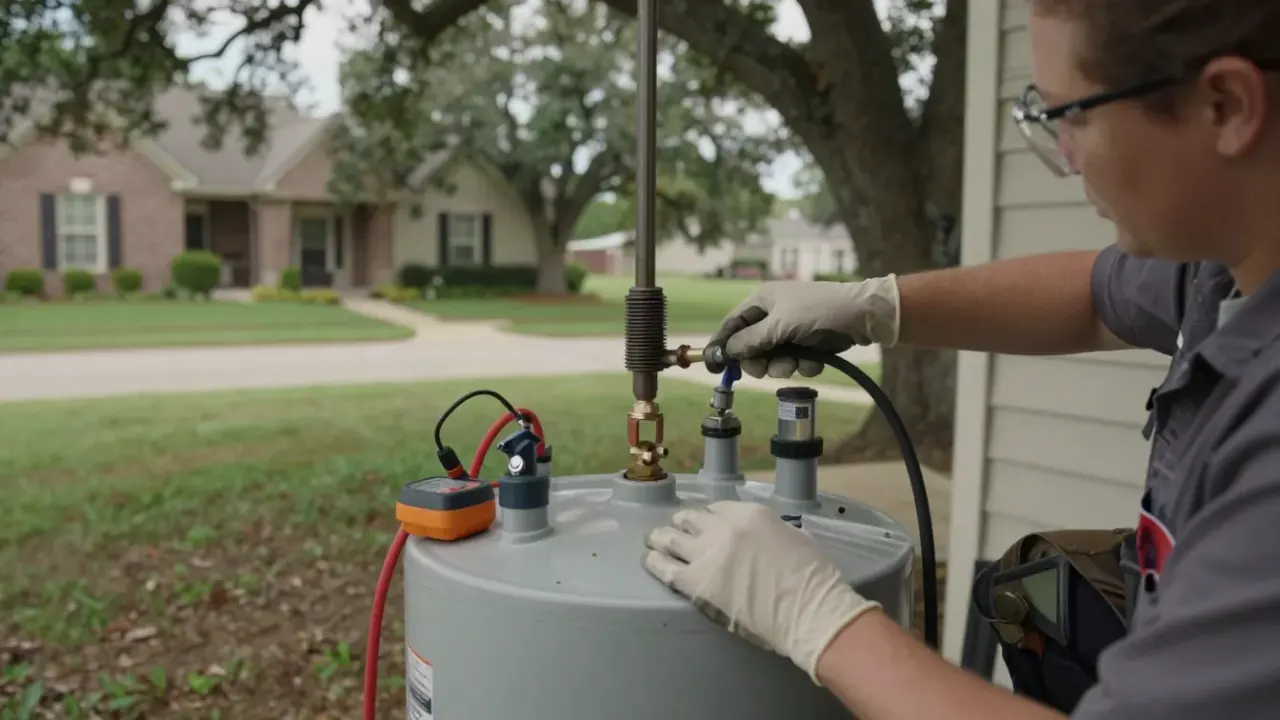
Your water heater is popping and rumbling because sediment has collected on the bottom of the tank and the burner is boiling water trapped underneath it. Those trapped pockets of water flash to steam, and the steam bubbles collapse against the tank floor - that is the pop, the bang, and the rolling rumble you hear through the house. It is the single most common water heater complaint we get from homeowners across Katy, and it is almost always fixable before the tank fails. Below we cover what causes it, why Katy water makes it worse, and exactly how to stop it.
What Causes Water Heater Popping and Rumbling Noises in Katy TX
Water heater popping and rumbling noises in Katy TX are a sediment problem, not a mechanical one - the tank itself is usually fine, but the mineral layer on the bottom has grown thick enough to trap water under it.
Every gallon of water that enters your tank carries dissolved calcium and magnesium. When the burner or element heats that water, the minerals drop out of solution and settle on the tank floor as a crusty scale. Over 12 to 24 months, that layer can build to a quarter inch or more. Water gets trapped between the scale and the steel, the burner heats it past 212°F, and it flashes to steam. The steam bubble bursts, the water slams back down, and you hear the pop.
Rumbling is the same event on a bigger scale - a wide, thick sediment bed boiling unevenly across the whole tank bottom. If you have ever heard a pot of rice boiling dry on the stove, that crackling, rolling sound is the same physics happening inside your water heater.
Three other noises get confused with sediment popping, and they point to different problems:
- Hammering or banging - usually water hammer in the pipes, not the tank.
- High-pitched whining - a failing heating element or a partially closed valve.
- Hissing or a steady whistle - a pressure or temperature relief valve doing its job, or a tank running too hot.
If the sound is a rhythmic pop that gets louder as the burner runs, sediment is your answer.
Why Katy Water Is Hard on Water Heaters
Katy sits on some of the hardest municipal and well water in the greater Houston area, and that hardness is what feeds the sediment layer in your tank.
Hardness is measured in grains per gallon. Water under 3.5 gpg is considered soft. Most of the water feeding homes in Katy, Cinco Ranch, Firethorne, and the surrounding Fort Bend and Harris County neighborhoods runs 8 to 12 gpg - two to three times the threshold where scale starts forming fast. That means a tank that might last 12 years in a soft-water city often needs its first flush at 12 to 18 months here.
It is not just the tank. The same minerals coat the inside of your pipes, your showerheads, and your dishwasher. We see this pattern across older and newer subdivisions alike. Homeowners in Water Heater Repair in Cinco Ranch deal with the same sediment buildup we find in Water Heater Repair in Fulshear, because the source water is essentially the same aquifer and surface supply.
Two things make it worse:
- Higher thermostat settings. A tank set to 140°F precipitates minerals faster than one set to 120°F.
- Long idle periods. Guest houses, vacation homes, and rentals that sit unused for weeks let sediment settle and harden undisturbed.
Is the Popping Noise Dangerous?
The popping itself is not dangerous, but the sediment causing it will eventually destroy the tank - and that is where the real risk lives.
Here is the chain of events. Sediment insulates the bottom of the tank from the water above it. The steel floor overheats. Over months, that localized overheating fatigues the metal and cracks the glass-lined interior. Once the lining fails, the steel starts corroding from the inside. A tank that fails this way does not weep - it ruptures, and 40 to 80 gallons of hot water hits the floor in under a minute.
We have walked into Katy garages where the tank let go overnight and the water ran into a finished living room. That is a $6,000 to $15,000 insurance claim depending on flooring, drywall, and what the water reached.
So the honest answer: a popping water heater is not an emergency today. It is a warning that you have months, not years, before the tank gives out. Fixing it now costs a fraction of replacing a flooded floor.
How to Stop Water Heater Rumbling in Katy Texas
Stopping the rumbling means removing the sediment layer - either by flushing the tank or, if the buildup is severe, replacing the tank before it fails.
Step 1: Drain and flush the tank
Shut off the gas or power, close the cold inlet, connect a hose to the drain valve, and run the tank empty into a floor drain or driveway. Once it is drained, open the cold inlet briefly to stir up the sediment and let it run out. Repeat until the water comes clear. On a lightly scaled tank, this takes 30 to 45 minutes.
Step 2: Inspect the anode rod
While the tank is drained, pull the anode rod. It is a sacrificial magnesium or aluminum rod that corrodes so your tank does not. In Katy water, an anode rod is usually spent in 3 to 5 years. Replacing it is a $150 to $250 job that can add years to the tank's life. Our anode rod and tank flush maintenance Katy TX service covers both the flush and the rod in one visit.
Step 3: Consider a descaling treatment for severe buildup
If the sediment has hardened into a crust that a simple flush will not break up, we use a descaling solution to dissolve it. On tankless units, descaling is the standard annual service - see our tankless flush and descaling Katy TX page for what that involves.
Step 4: Set the thermostat correctly
120°F is the sweet spot for most Katy homes. It slows mineral precipitation, cuts standby heat loss, and still delivers plenty of hot water for showers and laundry.
Typical 2026 pricing in this area: a standard tank flush runs $150 to $300. A flush plus anode rod replacement runs $250 to $450. If the tank is over 10 years old and the sediment is thick, replacement is the smarter money - see our tank replacement Katy TX service for what that involves.
Common Mistakes We See Homeowners Make
Most of the damage we repair started with a homeowner doing one of these five things.
- Ignoring the noise for years. Popping is the tank asking for maintenance. Waiting until it leaks means paying for a new tank and possibly new flooring.
- Flushing only once, ever. In Katy water, sediment rebuilds in 12 to 18 months. A single flush is a reset, not a cure.
- Turning the thermostat up to "fix" the noise. Higher heat precipitates minerals faster and makes the problem worse.
- Draining a tank that has never been flushed. On a 15-year-old tank with a thick scale bed, the drain valve can clog or the tank floor can fail during the drain. That is a job to hand to a pro.
- Replacing the heating element without flushing. On electric tanks, a new element dropped into a sediment-choked tank will burn out in months.
When to Call a Professional
Call a professional when the tank has never been flushed, when the popping has been going on for more than a few months, or when you see any water around the base of the unit.
Those are the cases where a DIY drain can turn a $250 maintenance job into a $1,500 emergency. We handle the flush, inspect the anode rod and the relief valve, check the T&P line, and confirm the tank is holding pressure before we leave. If the tank is too far gone, we tell you straight and walk you through replacement options the same day.
If your tank is making noise and you are not sure whether it is sediment or something worse, our no hot water diagnosis Katy TX visit covers the full system - tank, elements, thermostat, and pressure - so you know exactly what you are dealing with.
Frequently Asked Questions
Why is my water heater making popping noises in Katy TX?
Sediment on the tank floor traps water, the burner boils it to steam, and the steam bubbles pop. Katy's 8 to 12 gpg hard water builds that sediment layer in 12 to 18 months, faster than in soft-water cities.
Is popping noise from a water heater dangerous in Katy?
Not immediately - but it means the tank floor is overheating, which cracks the glass lining and leads to a full rupture within 6 to 24 months. A $200 flush now prevents a $6,000-plus water damage claim later.
How do I stop water heater rumbling in Katy Texas?
Drain and flush the tank, replace the anode rod if it is spent, and set the thermostat to 120°F. On a lightly scaled tank that stops the noise the same day. Thick, hardened scale needs a descaling treatment or replacement.
Who can flush my water heater near me in Katy?
We do - same-week scheduling across Katy and the surrounding Fort Bend and Harris County neighborhoods. A standard flush takes 45 to 60 minutes, and we check the anode rod and relief valve while we are there.
How often should a Katy water heater be flushed?
Every 12 months in Katy's hard water. If you have never flushed the tank and it is over 8 years old, have a pro do the first one - the drain valve or tank floor can fail on a heavily scaled unit.
Get Help With Water Heater Repair in Katy
If your water heater is popping, rumbling, or just not keeping up, our team can flush it, replace the anode rod, or tell you honestly whether it is time for a new tank. We serve Katy and the surrounding neighborhoods, and we quote the price before we start.
Call (281) 326-6032 to schedule your water heater flush or repair.